From real-time monitoring to cybersecurity: the key role of smart technology in modern sustainable properties
Today, digital technologies play a central role
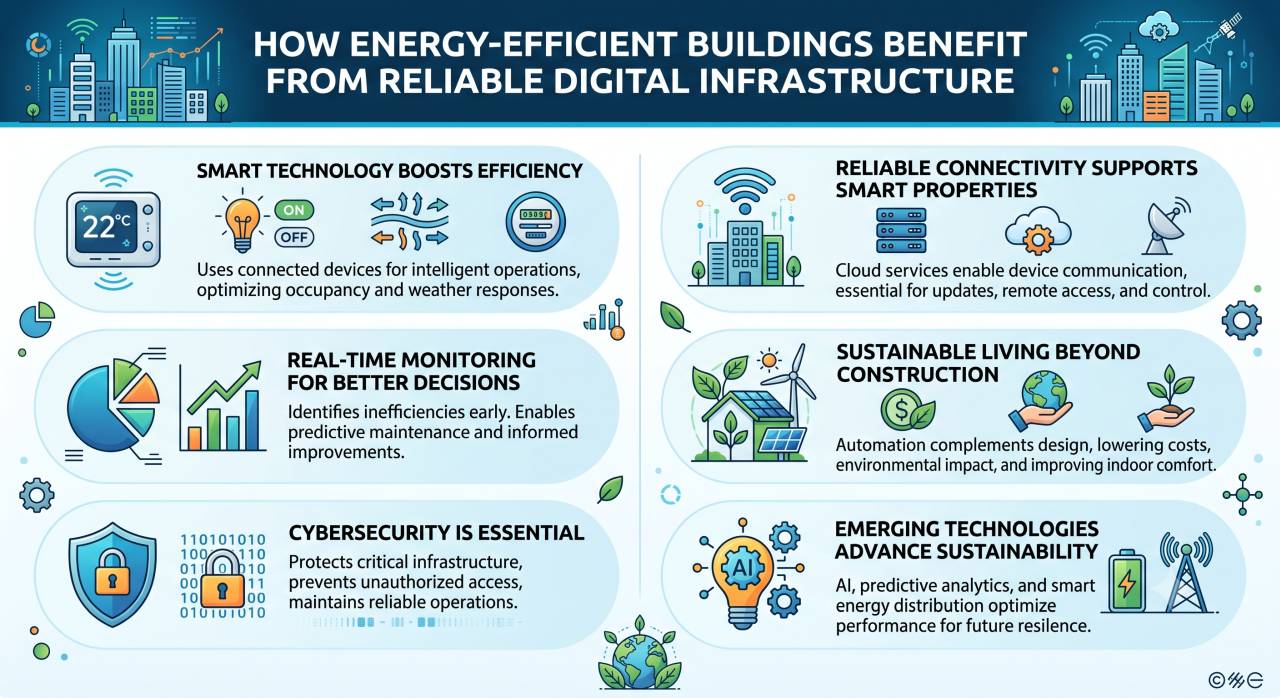
Sustainable buildings are evolving beyond efficient insulation, renewable energy systems, and environmentally friendly construction materials. Today, digital technologies play a central role in helping residential and commercial properties monitor energy consumption, automate essential systems, and improve overall operational efficiency. As Europe continues investing in greener infrastructure, smart technologies are becoming valuable tools for achieving long-term sustainability goals.
Property owners increasingly recognize that connected devices can simplify energy management while improving comfort. Smart meters, automated lighting, intelligent heating controls, and cloud-based monitoring platforms enable buildings to respond dynamically to changing conditions. These innovations reduce unnecessary resource consumption while providing greater visibility into everyday building performance.
The same dependable digital infrastructure that supports smart property management also enables secure online financial services, cloud applications, and regulated entertainment platforms. Many users researching services such as sky hills casino look for secure connections, transparent platform information, and reliable performance before interacting with a website. This reflects a broader expectation that digital platforms, regardless of industry, should prioritize trust, stability, and user security.
Smart technology improves building efficiency
Connected technologies help buildings operate more intelligently by collecting data and automatically adjusting systems when needed. Instead of relying on fixed schedules, smart controls respond to occupancy, weather conditions, and actual energy demand.
Popular energy-saving technologies include:
- Smart thermostats
- Automated lighting systems
- Occupancy sensors
- Connected ventilation controls
- Smart electricity meters
- Remote building management platforms
These solutions improve efficiency while reducing unnecessary energy consumption throughout the property.
Real-Time monitoring creates better decisions
One of the greatest advantages of modern building management is access to detailed performance information. Continuous monitoring allows property owners to identify inefficiencies before they become costly problems.
| Monitoring System | Practical Benefit |
|---|---|
| Smart electricity meters | Track real-time energy use |
| Water monitoring sensors | Detect leaks early |
| Indoor climate sensors | Maintain efficient temperatures |
| Equipment diagnostics | Improve maintenance planning |
| Remote dashboards | Manage systems from anywhere |
Accurate data helps homeowners and facility managers make informed improvements that support sustainability objectives.
Reliable connectivity supports smart properties
Modern energy-efficient buildings depend on stable internet connections to keep connected systems operating efficiently. Cloud-based services enable devices to communicate, receive software updates, and provide remote access to building controls.
Reliable connectivity supports:
- Remote monitoring
- Automated energy scheduling
- Smart appliance integration
- Security surveillance
- Maintenance notifications
- Renewable energy management
Without dependable internet access, many smart technologies cannot perform at their full potential.
Sustainable living extends beyond construction
Energy efficiency is achieved through a combination of thoughtful design and responsible technology use. Smart automation complements traditional energy-saving measures by ensuring systems operate only when necessary.
Key advantages include:
- Lower utility costs
- Reduced environmental impact
- Improved indoor comfort
- Extended equipment lifespan
- Better resource management
Together, these benefits create healthier and more efficient living environments.
Choosing connected solutions wisely
Selecting smart building technologies involves evaluating both technical performance and long-term reliability. Careful planning helps property owners invest in systems that remain effective for years.
Important evaluation factors
| Category | What to consider |
|---|---|
| Energy savings | Expected reduction in consumption |
| Compatibility | Works with existing equipment |
| Security | Protects connected devices |
| Software support | Regular updates available |
| Ease of operation | User-friendly management tools |
| Scalability | Supports future expansion |
Considering these factors improves the likelihood of achieving lasting efficiency gains.
Cybersecurity is essential for connected buildings
As more devices become internet-connected, protecting digital infrastructure becomes increasingly important. Secure systems reduce the risk of unauthorized access while helping maintain reliable building operations.
Recommended cybersecurity practices include:
- Creating strong passwords
- Enabling multi-factor authentication
- Updating device firmware regularly
- Securing home or office Wi-Fi networks
- Monitoring connected devices
- Removing inactive user accounts
Strong cybersecurity supports both operational reliability and responsible property management.
Emerging technologies continue to improve sustainability
New digital innovations are making buildings even more efficient. Artificial intelligence, predictive analytics, and automation allow systems to anticipate energy demand and optimize performance automatically.
Emerging developments include:
- AI-powered heating optimization
- Predictive maintenance systems
- Smart battery storage
- Renewable energy integration
- Intelligent energy distribution
These technologies are expected to further reduce environmental impact while improving building performance across residential and commercial properties.
Building smarter for a sustainable future
Modern sustainable buildings combine efficient construction with intelligent digital infrastructure to maximize long-term performance. Connected technologies help property owners reduce energy consumption, improve comfort, and simplify building management through data-driven decision-making. As smart solutions continue to evolve, integrating reliable technology into energy-efficient properties will remain an important part of creating resilient and environmentally responsible buildings.
Se ritenete utile il contenuto di questa pagina condividetelo su Facebook o Twitter.
Tweet
 Via Galilei, 1
 +39 351 7828816