Improve the energy efficiency of residential and commercial buildings
Smart buildings are becoming the new standard
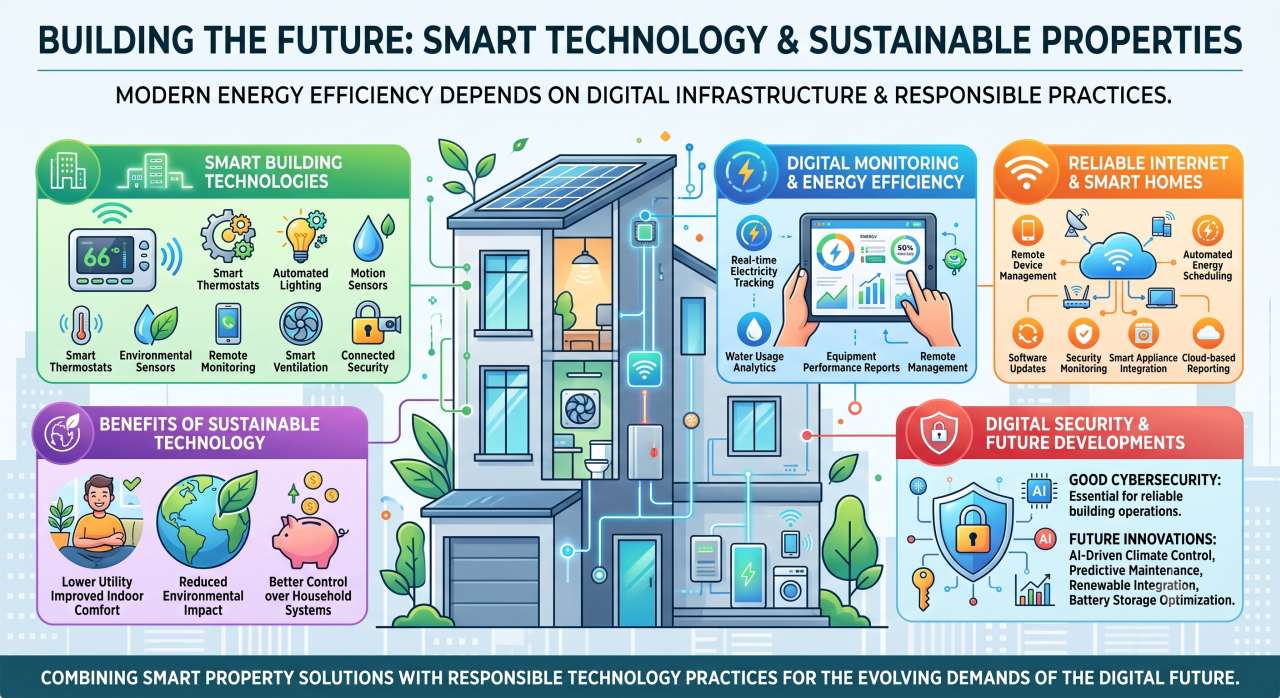
Improving the energy efficiency of residential and commercial buildings involves more than installing better insulation or upgrading heating systems. Modern properties increasingly rely on digital technologies that optimize energy consumption, automate daily operations, and provide real-time monitoring. As sustainability becomes a priority across Europe, integrating efficient digital solutions has become an important part of responsible property management.
Homeowners, property managers, and developers are adopting connected technologies to improve comfort while reducing unnecessary energy consumption. Smart thermostats, automated lighting, environmental sensors, and cloud-based monitoring systems help buildings operate more efficiently without compromising convenience. These innovations demonstrate how digital infrastructure contributes to long-term sustainability goals.
The expansion of digital infrastructure also supports industries beyond property management, including online entertainment and interactive media that depend on stable, high-performance networks. Platforms such as Spacehills highlight how reliable digital ecosystems enable modern online experiences, illustrating the broader importance of secure and efficient technology infrastructure across different sectors.
Smart buildings are becoming the new standard
Buildings equipped with intelligent technologies can automatically respond to changing environmental conditions. Heating, cooling, ventilation, and lighting systems work together to minimize energy waste while maintaining comfortable indoor environments.
Common smart building technologies include:
- Smart thermostats
- Automated lighting controls
- Motion and occupancy sensors
- Remote energy monitoring
- Smart ventilation systems
- Connected security devices
These solutions reduce unnecessary energy use while providing property owners with greater control over building performance.
Digital monitoring improves energy efficiency
Continuous monitoring allows homeowners and facility managers to understand exactly how energy is being consumed. Instead of relying on monthly utility bills alone, smart systems provide detailed insights that help identify opportunities for improvement.
| Monitoring feature | Sustainability benefit |
|---|---|
| Real-time electricity tracking | Identifies excessive consumption |
| Temperature monitoring | Optimizes heating and cooling |
| Water usage analytics | Detects unnecessary waste |
| Equipment performance reports | Improves maintenance planning |
| Remote management | Reduces unnecessary energy use |
Having access to accurate data makes it easier to implement targeted energy-saving strategies.
Reliable Internet supports modern smart homes
Many energy-saving technologies rely on stable internet connections to communicate with cloud-based platforms and connected devices. Without dependable digital infrastructure, automation systems may lose efficiency or fail to provide timely information.
Reliable connectivity supports:
- Remote device management
- Automated energy scheduling
- Software updates
- Security monitoring
- Smart appliance integration
- Cloud-based performance reporting
Strong digital infrastructure has therefore become an essential component of efficient building management.
Sustainable technology benefits everyday living
Energy-efficient technologies offer practical advantages beyond reducing electricity consumption. They also improve comfort, simplify maintenance, and contribute to lower operating costs over time.
Some of the most noticeable benefits include:
- Lower utility expenses
- Improved indoor comfort
- Reduced environmental impact
- Longer equipment lifespan
- Better control over household systems
These advantages make sustainable technologies increasingly attractive for both homeowners and commercial property operators.
Choosing smart systems carefully
Selecting energy-efficient technologies requires careful evaluation. Not every solution offers the same level of performance, compatibility, or long-term value.
Important evaluation criteria
| Category | What to consider |
|---|---|
| Energy performance | Expected efficiency improvements |
| Compatibility | Integration with existing systems |
| Installation requirements | Complexity and maintenance needs |
| Security | Protection of connected devices |
| Scalability | Ability to expand over time |
| Manufacturer support | Software updates and technical assistance |
Comparing these factors helps property owners invest in technologies that remain effective for years.
Digital security is part of sustainable property management
As more building systems become connected, cybersecurity has become another important consideration. Protecting smart devices helps maintain reliable building operations while safeguarding personal information.
Recommended security practices include:
- Using strong passwords
- Enabling multi-factor authentication
- Keeping device firmware updated
- Securing Wi-Fi networks
- Monitoring connected devices regularly
Good cybersecurity complements energy efficiency by ensuring connected systems continue operating safely and reliably.
Future developments in sustainable buildings
Innovation continues to reshape the construction and property management industries. Artificial intelligence, predictive analytics, and machine learning are increasingly helping buildings anticipate energy demand and automatically optimize system performance.
Emerging technologies are expected to support:
- Predictive maintenance
- AI-driven climate control
- Renewable energy integration
- Battery storage optimization
- Intelligent electricity distribution
These developments will likely improve both sustainability and long-term operating efficiency.
Creating smarter and more sustainable properties
Sustainable buildings are no longer defined solely by efficient construction materials. Connected technologies, reliable digital infrastructure, and intelligent energy management now play equally important roles in reducing environmental impact. By combining smart property solutions with responsible technology practices, homeowners and businesses can create buildings that are efficient, secure, and prepared for the evolving demands of the digital future.
Se ritenete utile il contenuto di questa pagina condividetelo su Facebook o Twitter.
Tweet
 Via Galilei, 1
 +39 351 7828816