Smart buildings and modern business
How energy efficiency is transforming casino operations?
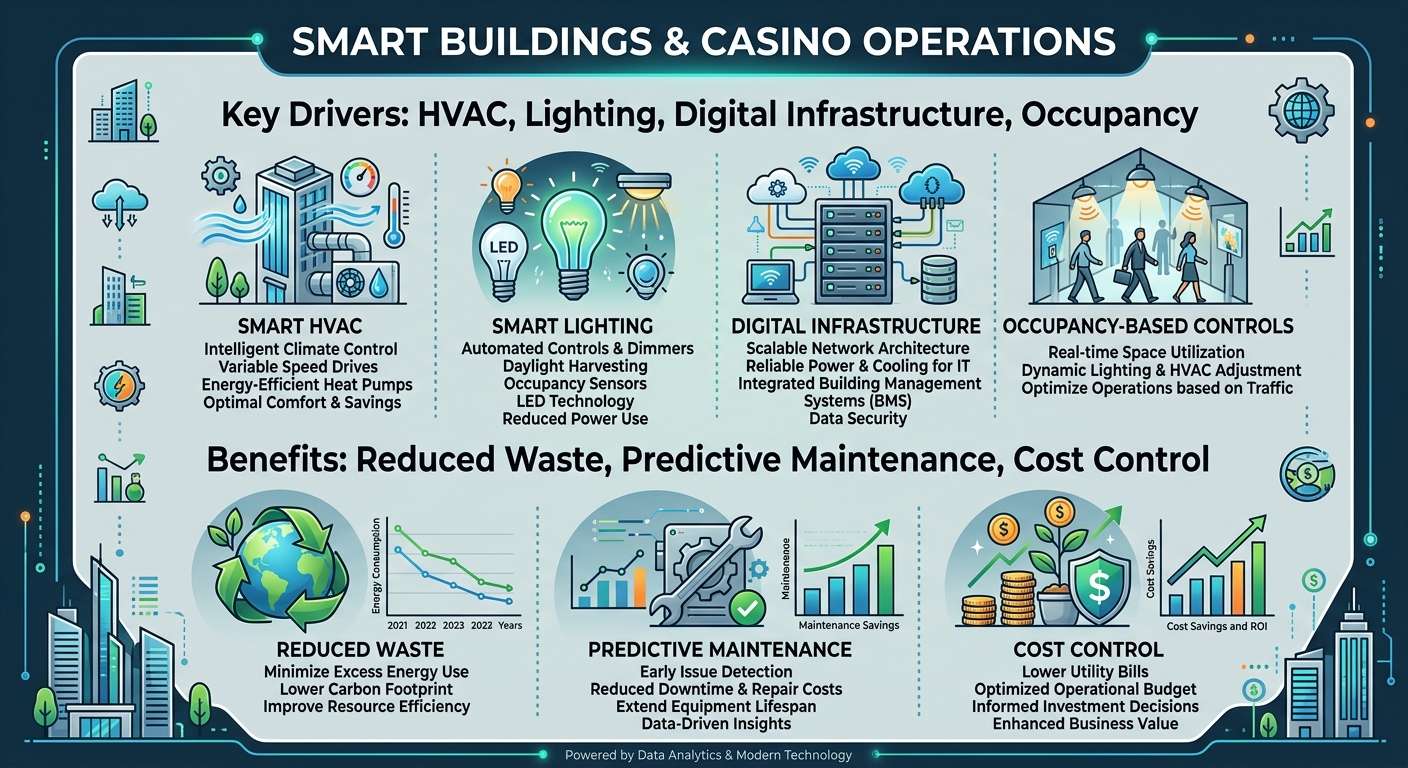
Energy efficiency is no longer limited to residential buildings or traditional office spaces. Businesses across many industries are examining how buildings, technology, and energy systems can work together to reduce waste while maintaining comfort and operational reliability. For companies managing large, technology-dependent facilities, the relationship between infrastructure and digital systems has become an increasingly important business consideration.
The shift is particularly relevant to entertainment businesses, where buildings can operate for long hours and accommodate substantial numbers of visitors, employees, equipment, and digital services. Casinos are a useful example because their operations combine physical spaces with sophisticated technology, lighting, climate control, security, and connected systems. Looking at Standard casinos from an operational technology perspective illustrates how infrastructure decisions can influence both efficiency and the customer experience.
Why Energy Management Matters in Large Commercial Spaces
Large commercial facilities can have many simultaneous energy demands. Heating, ventilation, and air conditioning systems must maintain comfortable indoor conditions, while lighting, electronic equipment, security infrastructure, and networking systems need dependable power.
For businesses, energy management is therefore not simply an environmental issue. It can also become part of operational planning and cost control.
A structured approach can include:
- Monitoring electricity consumption across different areas
- Identifying equipment that operates unnecessarily
- Improving heating and cooling controls
- Using efficient lighting systems
- Automating building functions where appropriate
- Reviewing energy performance regularly
These measures can help businesses understand where energy is being consumed rather than relying solely on estimated usage.
Smart Technology Connects the Building to the Business
The development of smart-building technology has changed the way commercial properties can be managed. Sensors, connected devices, building-management platforms, and automated controls can provide information about conditions inside a facility.
Instead of treating heating, lighting, security, and other systems as completely separate functions, businesses can increasingly coordinate them through integrated technology.
For example, occupancy sensors may help determine whether a particular area requires full lighting or climate control. Monitoring platforms can also identify unusual consumption patterns that might indicate inefficient equipment or maintenance requirements.
Data Makes Energy Decisions More Practical
One of the most important advantages of connected systems is visibility. Business owners and facility managers can examine actual operational data instead of making decisions based entirely on assumptions.
Useful measurements may include:
| Area | Information to Monitor | Potential Business Benefit |
|---|---|---|
| HVAC | Temperature and operating hours | Better climate management |
| Lighting | Usage by area and schedule | Reduced unnecessary consumption |
| Equipment | Power demand and operating patterns | Easier maintenance planning |
| Occupancy | Use of different spaces | More responsive building controls |
| Utilities | Long-term consumption | Better budgeting and planning |
The goal is not simply to collect more data. Information becomes useful when it supports practical decisions about equipment, maintenance, scheduling, and building performance.
The Growing Role of Digital Infrastructure
Modern businesses increasingly depend on digital infrastructure. Servers, networking equipment, security systems, payment technology, displays, and communication platforms all require reliable power and suitable environmental conditions.
This creates a direct relationship between energy management and technology management. A business may invest heavily in sophisticated software, but the underlying physical infrastructure still needs to provide stable conditions for those systems.
That is why energy planning should be considered alongside broader technology strategy rather than treated as an isolated facilities issue.
Efficiency Can Support Better Facility Planning
Energy efficiency can also influence decisions about renovations and new construction. When a commercial property undergoes refurbishment, businesses have an opportunity to evaluate insulation, windows, HVAC equipment, lighting, controls, and renewable-energy options together.
An energy assessment can help identify where improvements may have the greatest practical value. In Italy, building energy certification and related technical assessments can also provide important information about a property’s energy performance.
The objective is to create a building that works efficiently as a complete system rather than simply replacing individual components without considering how they interact.
Renewable Energy and Commercial Technology
Renewable energy is another part of the changing relationship between buildings and technology. Solar photovoltaic systems, energy storage, efficient heat pumps, and smart controls can potentially form part of an integrated energy strategy.
The broader transition toward cleaner heating and energy systems is also receiving attention internationally. Reuters has reported on projects involving heat pumps, recovered energy, and district heating as part of efforts to reduce fossil-fuel dependence in buildings.
For businesses, the important lesson is that renewable energy works best when considered alongside consumption patterns, building characteristics, available infrastructure, and operational requirements.
From Traditional Facilities to Intelligent Buildings
The concept of an intelligent building goes beyond installing connected devices. It involves using technology to understand how a property operates and then applying that information to improve performance.
A well-designed system can bring together:
- Energy monitoring
- Automated lighting
- Climate-control systems
- Access and security technology
- Equipment monitoring
- Occupancy information
- Maintenance alerts
- Centralized reporting
The result is a more connected approach to facility management. Instead of reacting to problems only after they occur, businesses can use data to identify patterns and plan maintenance or adjustments earlier.
The Business Value of Thinking Beyond Energy Bills
Energy efficiency is often discussed in terms of reducing utility costs, but its potential business impact can be broader. Better building controls can contribute to predictable operating conditions, improved maintenance planning, and more informed investment decisions.
For technology-driven businesses, this connection is particularly important. Physical infrastructure supports digital operations, and inefficient infrastructure can create unnecessary costs or operational complications.
The same principle applies across offices, hotels, entertainment venues, retail facilities, and other commercial environments.
Building Performance as Part of Digital Transformation
Digital transformation is often associated with software, automation, artificial intelligence, and cloud services. Yet the physical building where those technologies operate remains an important part of the equation.
A modern business therefore benefits from viewing energy systems, building controls, and digital infrastructure as connected elements. The combination of reliable technology and efficient physical systems can provide a stronger foundation for long-term operational planning.
As buildings become more connected, energy performance is increasingly becoming a technology question as well as an environmental and facilities-management question. The most useful approach is not simply to consume less energy, but to understand how a building operates and use better information to manage it intelligently.
Se ritenete utile il contenuto di questa pagina condividetelo su Facebook o Twitter.
Tweet
 Via Galilei, 1
 +39 351 7828816