Powering the Gaming Arena
How Energy-Efficient Buildings Are Shaping eSports
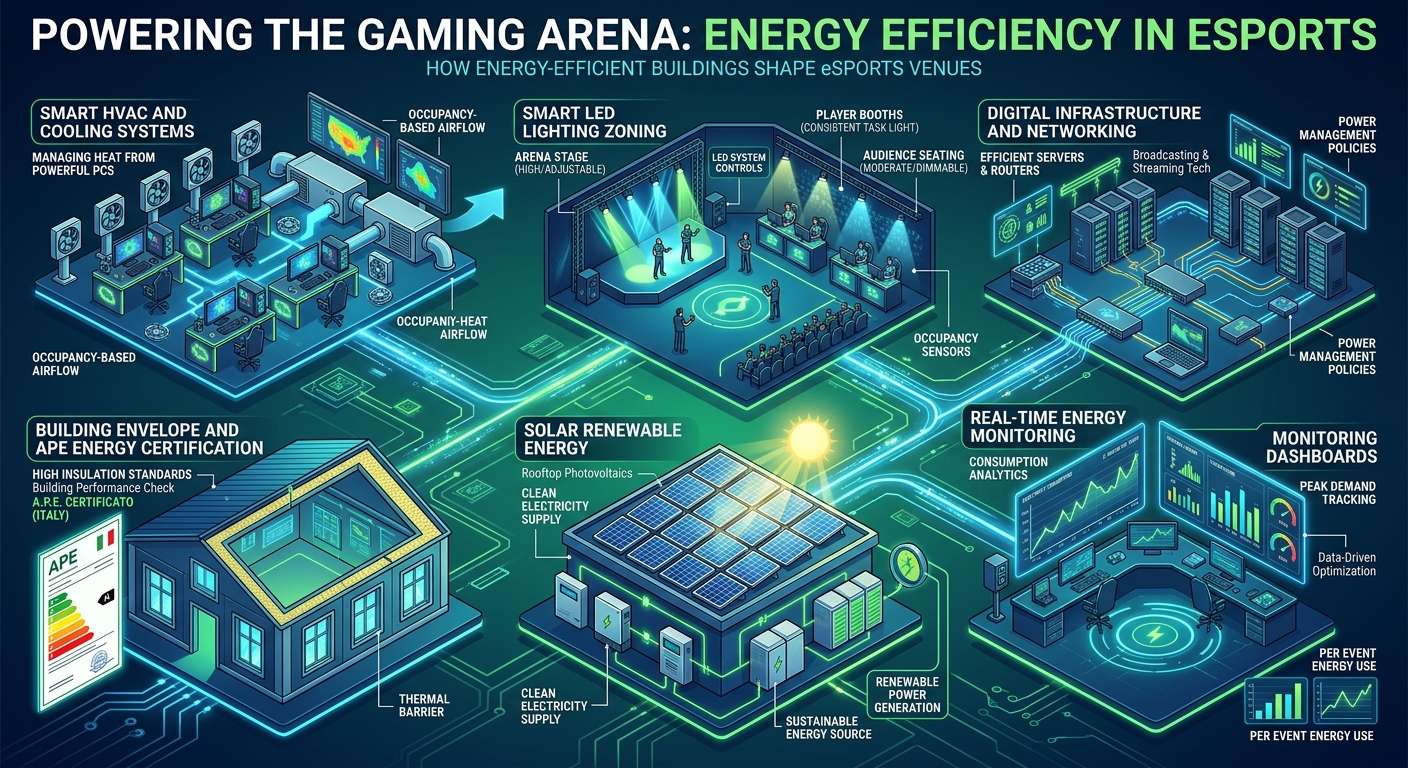
The growth of video games and eSports has created a new type of technology-driven environment. Competitive gaming events now take place in dedicated arenas, conference centres, gaming lounges, university facilities, and purpose-built studios containing powerful computers, large displays, networking equipment, lighting systems, and climate-control technology. As these spaces become more sophisticated, their energy requirements deserve greater attention.
Unlike a conventional office, a gaming venue may have dozens or hundreds of electronic devices operating simultaneously. High-performance computers generate heat, large displays require continuous electricity, and audiences create additional cooling and ventilation requirements. The same broader digital entertainment ecosystem also includes people playing at Noxino Casino and other online platforms, demonstrating how entertainment increasingly depends on technology and reliable digital infrastructure.
Why Energy Efficiency Matters in Gaming Facilities
A modern eSports venue must provide a stable environment for both players and equipment. Computers used for competitive gaming can operate at high performance for extended periods, while servers, routers, monitors, LED screens, and audiovisual systems add further electricity demand.
For venue operators, energy efficiency can therefore have practical financial and operational benefits. Reducing unnecessary consumption can help control running costs without compromising the technical conditions required for competitive events.
Important areas for consideration include:
- Efficient heating and cooling systems
- High-performance lighting
- Smart energy controls
- Building insulation
- Efficient computer equipment
- Network infrastructure
- Renewable-energy generation
- Real-time electricity monitoring
Managing Heat in High-Performance Gaming Spaces
Why Cooling Is Particularly Important
Gaming computers and professional eSports equipment can generate substantial heat. When many systems operate simultaneously in a relatively enclosed space, the resulting thermal load can place significant demands on air-conditioning equipment.
An inefficient HVAC system may consume excessive electricity while still struggling to maintain appropriate indoor temperatures. Proper building design, equipment positioning, ventilation, and temperature monitoring can help create a more balanced environment.
Smart HVAC Controls
Modern building-management systems can adjust cooling according to actual occupancy and thermal conditions. Sensors can monitor temperature and humidity while automated controls respond to changes in demand.
For example, a training room that is occupied only during scheduled sessions does not need to maintain the same cooling level throughout the entire day. Smart controls can reduce unnecessary operation while preserving suitable conditions when players and equipment are present.
Designing Efficient eSports Venues
An energy-conscious gaming facility begins with the building itself. Insulation, windows, ventilation, orientation, and the building envelope can all influence how much energy is required to maintain comfortable internal conditions.
Energy certification can provide useful information when evaluating an existing property or planning improvements. In Italy, the APE (Attestato di Prestazione Energetica) provides information about a building’s energy performance and can support broader property-related decisions.
For an eSports organisation considering a new venue, building performance can therefore be considered alongside location, floor area, connectivity, and technical infrastructure.
Smart Lighting for Gaming Events
Lighting plays an important role in both the atmosphere and functionality of an eSports venue. Event spaces may require stage lighting, audience illumination, decorative LEDs, display lighting, and general-purpose fixtures.
Modern LED systems can provide efficient illumination while supporting sophisticated control options. Different areas can be managed independently so that lighting levels correspond to actual requirements.
Zoning the Lighting System
A practical zoning strategy might divide a venue into:
| Zone | Typical Lighting Requirement |
|---|---|
| Competition stage | High and adjustable |
| Player areas | Consistent task lighting |
| Audience seating | Moderate and controllable |
| Corridors | Lower, sensor-controlled |
| Storage rooms | Occupancy-based |
| Offices | Standard workplace lighting |
This approach avoids treating the entire facility as one lighting zone and can reduce unnecessary electricity consumption.
The Growing Role of Digital Infrastructure
eSports venues depend on more than gaming computers. Reliable networking is essential for competitive play, broadcasting, communication, and event management.
Routers, switches, servers, streaming equipment, cameras, and broadcasting systems may operate for long periods. Their energy consumption can be monitored as part of the venue’s wider energy-management strategy.
Efficient equipment selection is one possible approach. Another is to ensure that devices are configured appropriately and that equipment not required outside event periods is not left operating unnecessarily.
Renewable Energy for Gaming Facilities
Renewable energy can complement efficiency measures in suitable properties. Solar photovoltaic systems may be particularly relevant for gaming venues with large commercial roofs or other suitable installation areas.
Before installing photovoltaic panels, however, a property assessment should consider roof structure, orientation, available surface area, local solar conditions, electricity demand, and installation requirements.
Solar generation is most effective when combined with measures that reduce unnecessary consumption. Improving the building envelope and upgrading inefficient systems can help reduce the amount of electricity the facility requires in the first place.
Measuring the Energy Performance of an eSports Venue
Energy efficiency should be based on measurable performance rather than assumptions. Smart meters and monitoring platforms can help operators understand how electricity is being consumed during tournaments, training sessions, and inactive periods.
Useful measurements include:
- Total daily electricity consumption
- Peak electrical demand
- HVAC consumption
- Lighting consumption
- IT and networking loads
- Energy use per event
- Changes after efficiency upgrades
Comparing these measurements over time can help facility managers identify unusual consumption and evaluate whether investments are producing measurable improvements.
Building Better Gaming Environments
The development of eSports demonstrates how digital entertainment can influence the requirements of modern buildings. A gaming venue must support powerful technology while also providing comfortable conditions for players, spectators, staff, and broadcasting teams.
Energy certification, efficient HVAC systems, smart lighting, renewable energy, and continuous monitoring can work together to create a more efficient facility. These principles are not limited to eSports arenas; they can also apply to gaming lounges, technology offices, educational facilities, and other spaces where intensive digital equipment is used.
As competitive gaming continues to rely on increasingly sophisticated technology, the physical environments supporting it will need to evolve as well. Efficient buildings can provide the stable infrastructure necessary for digital entertainment while helping property owners manage energy consumption and long-term operating requirements.
Se ritenete utile il contenuto di questa pagina condividetelo su Facebook o Twitter.
Tweet
 Via Galilei, 1
 +39 351 7828816