From Efficient Buildings to Digital Entertainment
The Changing Energy Needs of Modern Casinos
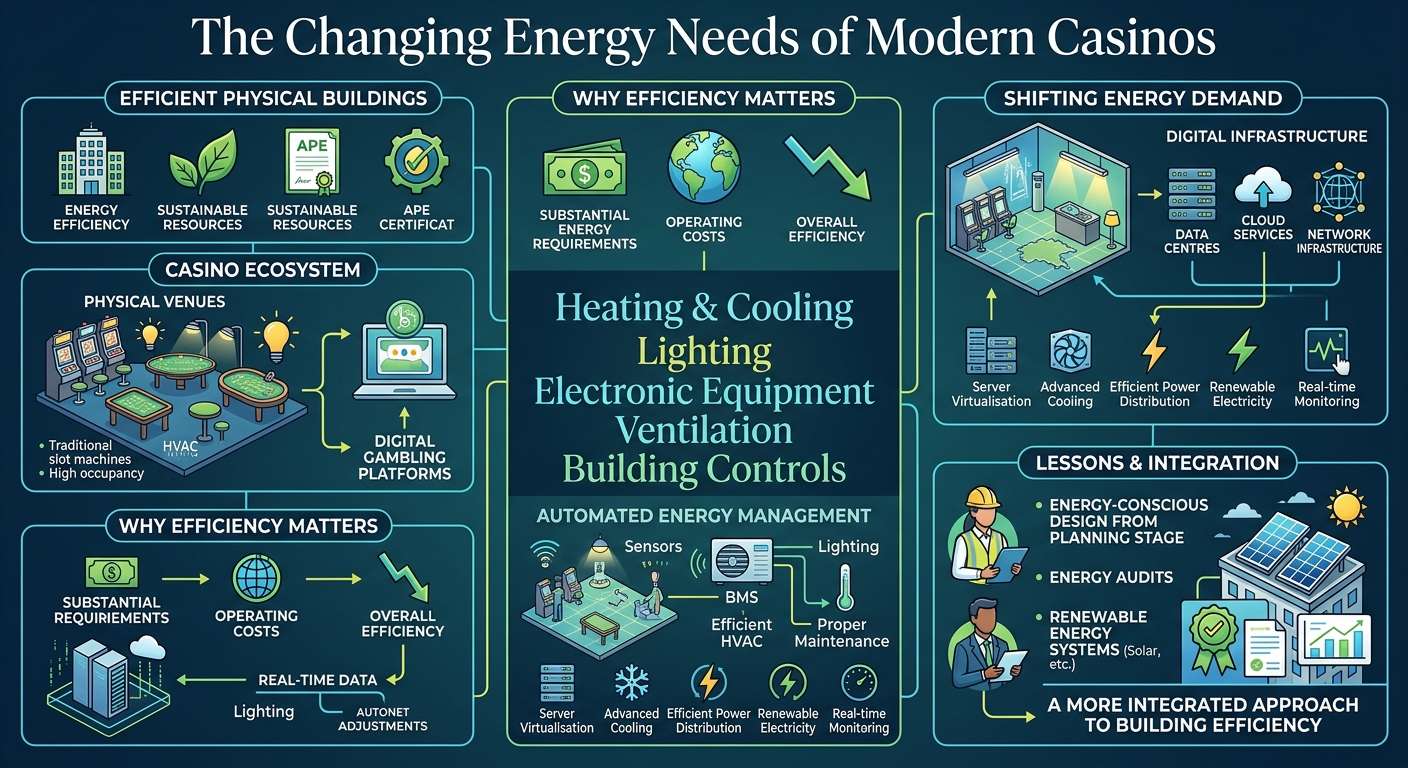
Energy efficiency has become an increasingly important consideration for modern buildings. From residential properties and condominiums to offices, hotels, and commercial facilities, reducing energy consumption can improve operational efficiency while supporting more sustainable use of resources. The principles behind building energy certification, including the Italian APE framework, are therefore becoming relevant across a growing range of industries.
The entertainment sector is also experiencing this transition. Traditional casinos, hotels with gaming facilities, and modern digital entertainment businesses all depend on technology, lighting, climate control, and reliable electrical infrastructure. As digital gambling platforms become more widely used, consumers can also visit Noxino casino as part of the broader shift toward online entertainment that operates through increasingly sophisticated digital infrastructure.
Why Energy Efficiency Matters in Entertainment Facilities
Casinos and entertainment venues can have substantial energy requirements because they often operate for extended hours. Lighting systems, air conditioning, ventilation, electronic displays, security equipment, gaming machines, and computer networks may all operate simultaneously.
For property owners and facility managers, energy consumption is therefore not simply an environmental issue. It can directly influence operating costs and the overall efficiency of a building.
Several areas deserve particular attention:
- Heating and cooling: HVAC systems can represent a significant share of energy consumption.
- Lighting: Large entertainment spaces require extensive illumination throughout operating hours.
- Electronic equipment: Gaming machines, servers, displays, and networking equipment require continuous electricity.
- Ventilation: High-occupancy environments need appropriate air circulation and climate management.
- Building controls: Automated systems can help adjust energy use according to occupancy and demand.
An effective energy strategy considers these systems as parts of the same building rather than treating each one independently.
The Role of Smart Building Technology
Automated Energy Management
Modern building management systems can monitor electricity consumption and adjust equipment according to real-time conditions. Sensors can detect occupancy, temperature, humidity, and other variables, allowing heating, cooling, and lighting systems to respond more efficiently.
For example, lighting in a low-traffic corridor does not necessarily need to operate at the same intensity as lighting in an active gaming area. Automated controls can help match energy consumption with actual demand.
Efficient HVAC Systems
Climate control is particularly important in buildings with large numbers of occupants and electronic equipment. Efficient heat pumps, variable-speed ventilation systems, smart thermostats, and zoning controls can help reduce unnecessary energy consumption.
Proper maintenance is equally important. Filters, ventilation components, sensors, and cooling equipment that are not maintained correctly can operate less efficiently and consume more energy.
Digital Casinos and the Infrastructure Behind Them
The move toward online gambling changes where much of the energy demand occurs. Instead of concentrating electronic equipment in a single public venue, digital casino platforms depend on data centres, network infrastructure, cloud services, cybersecurity systems, and users’ own devices.
This creates a different relationship between entertainment and energy consumption. The physical casino floor may become less central, while digital infrastructure becomes increasingly important to the delivery of online services.
Data centres, in particular, require electricity not only to operate computing equipment but also to maintain appropriate temperatures. Cooling systems and power-management technologies therefore play an important role in determining the overall efficiency of digital infrastructure.
Efficient Data Centres
Modern data centres can employ several strategies to improve energy performance, including:
- Server virtualisation and workload optimisation
- Advanced cooling technologies
- Efficient power distribution systems
- Renewable electricity procurement
- Real-time monitoring of energy consumption
- Improved equipment utilisation
These measures can reduce wasted energy while maintaining the reliability required for services that operate continuously.
What Property Professionals Can Learn From Digital Operations
The development of digital entertainment provides useful lessons for traditional property management. One important principle is that energy efficiency should be considered from the planning stage rather than introduced only after a building is completed.
An energy-conscious design can incorporate efficient insulation, high-performance windows, appropriate ventilation, efficient lighting, renewable energy systems, and intelligent controls. These elements can work together to reduce the building’s overall energy demand.
For businesses occupying existing properties, an energy audit can identify areas where improvements may produce measurable benefits. This may include replacing inefficient lighting, improving insulation, upgrading HVAC equipment, or introducing automated controls.
Renewable Energy and Modern Commercial Buildings
Renewable energy is another important component of the transition toward more efficient buildings. Photovoltaic solar systems can allow commercial properties to generate part of their electricity requirements directly on-site.
For suitable buildings, rooftop solar can complement energy-efficiency measures by reducing dependence on electricity purchased from the grid. The effectiveness of such a system depends on factors including roof orientation, available surface area, local solar conditions, consumption patterns, and installation costs.
Energy certification and professional assessment can help property owners understand how different improvements affect the overall performance of a building.
Measuring Performance Instead of Assuming It
Energy efficiency should be supported by measurable information. Simply installing modern equipment does not automatically guarantee lower consumption if systems are poorly configured or used inefficiently.
Useful indicators can include:
| Area | What Can Be Monitored |
|---|---|
| Electricity | Total and peak consumption |
| HVAC | Operating hours and energy demand |
| Lighting | Consumption by zone |
| Solar | Energy generated on-site |
| Building controls | Automated adjustments and occupancy response |
| Equipment | Performance and maintenance requirements |
Regular monitoring allows facility managers to identify unusual consumption patterns and determine whether efficiency measures are producing the expected results.
A More Integrated Approach to Building Efficiency
The connection between energy certification and digital entertainment illustrates a broader trend: energy performance is no longer limited to traditional residential or office buildings. Commercial spaces, entertainment venues, technology facilities, and online-service infrastructure all depend on effective energy management.
For property owners and professionals, the objective is not simply to consume less energy. It is to understand where energy is being used, improve the efficiency of individual systems, and coordinate those systems so that the building performs effectively as a whole.
As technology continues to transform entertainment and business, energy efficiency will remain an important part of responsible property management. Better certification, smarter controls, renewable generation, and continuous monitoring can help create buildings that are more efficient, adaptable, and prepared for changing operational demands.
Se ritenete utile il contenuto di questa pagina condividetelo su Facebook o Twitter.
Tweet
 Via Galilei, 1
 +39 351 7828816