Energy efficiency in modern buildings
Digital trends, compliance and emerging online ecosystems
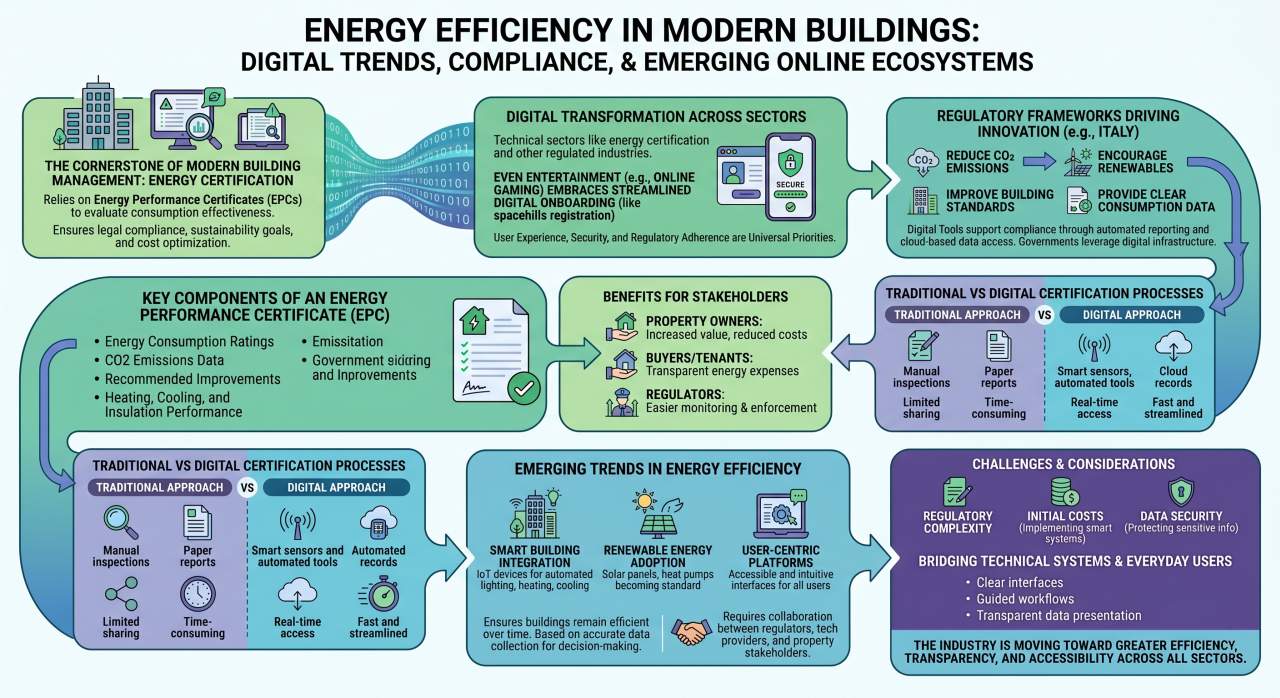
Understanding energy certification in a digital era
Energy certification has become a cornerstone of modern building management, particularly in countries like Italy where regulations demand strict compliance with efficiency standards. Property owners, developers, and businesses rely on energy performance certificates (EPCs) to evaluate how effectively a building consumes energy. These certifications not only ensure legal compliance but also contribute to sustainability goals and cost optimization.
As technology continues to evolve, the process of assessing, monitoring, and improving energy performance is increasingly supported by digital tools. From smart meters to automated reporting systems, innovation is reshaping how energy efficiency is measured and maintained across residential and commercial properties.
The convergence of digital platforms and regulated industries
The rise of digital ecosystems has influenced nearly every sector, including traditionally regulated spaces such as energy certification. Online platforms now offer services that simplify documentation, compliance tracking, and even simulation of energy performance improvements. This transformation mirrors broader digital adoption trends seen across industries.
Interestingly, this shift toward digital convenience is not limited to technical sectors. Even entertainment-focused industries, including online gaming and casino platforms, have embraced streamlined digital onboarding processes. For instance, platforms offering services like spacehills registration highlight how user-friendly interfaces and secure verification systems can enhance accessibility while maintaining compliance standards.
This parallel demonstrates how user experience, security, and regulatory adherence are becoming universal priorities across both technical and consumer-driven industries.
Regulatory frameworks driving innovation
Energy certification in Italy is governed by strict legislative frameworks that require transparency and accountability. These regulations are designed to:
- Reduce carbon emissions and environmental impact
- Encourage the adoption of renewable energy sources
- Improve building design and construction standards
- Provide clear energy consumption data to buyers and tenants
Digital tools have made it easier to meet these requirements. Automated systems can generate accurate reports, while cloud-based platforms allow stakeholders to access and share certification data efficiently.
According to a report by BBC, governments worldwide are increasingly leveraging digital infrastructure to support sustainability goals, emphasizing the importance of integrating technology into regulatory processes.
Key components of an energy performance certificate
Understanding what goes into an EPC helps property owners make informed decisions. These certificates typically include:
Core Elements
- Energy consumption ratings
- CO2 emissions data
- Recommended improvements for efficiency
- Heating, cooling, and insulation performance
Benefits for Stakeholders
- Property owners: increased property value and reduced operating costs
- Buyers and tenants: transparent insight into energy expenses
- Regulators: easier monitoring and enforcement of standards
Comparing traditional vs digital certification processes
The shift from manual to digital systems has significantly improved the efficiency of energy certification. The table below illustrates the key differences:
| Aspect | Traditional Approach | Digital Approach |
|---|---|---|
| Data collection | Manual inspections | Smart sensors and automated tools |
| Documentation | Paper-based reports | Cloud-based digital records |
| Accessibility | Limited sharing | Real-time access for stakeholders |
| Efficiency | Time-consuming | Fast and streamlined |
Digital transformation not only improves efficiency but also enhances accuracy, reducing the likelihood of human error in certification processes.
The role of data and transparency
Data plays a critical role in both energy certification and digital platforms. Accurate data collection enables better decision-making, whether it’s optimizing building performance or enhancing user experiences online.
Organizations like Forbes have highlighted how data-driven systems are becoming essential for maintaining transparency and trust in digital environments. In the context of energy certification, this means:
- Real-time monitoring of energy usage
- Predictive analytics for maintenance and upgrades
- Improved compliance reporting
These capabilities ensure that buildings remain efficient over time, rather than just meeting standards at a single point.
Emerging trends in energy efficiency
Several key trends are shaping the future of energy certification and building efficiency:
- Smart building integration: modern buildings are increasingly equipped with IoT devices that monitor and adjust energy usage automatically. These systems optimize lighting, heating, and cooling based on occupancy and environmental conditions.
- Renewable energy adoption: solar panels, heat pumps, and other renewable technologies are becoming standard features in new constructions. Certification frameworks are evolving to account for these innovations.
- User-Centric platforms: just as digital platforms in other industries prioritize user experience, energy certification tools are becoming more accessible and intuitive. This shift ensures that even non-technical users can understand and act on energy data.
Challenges and considerations
Despite the benefits, several challenges remain:
- Regulatory complexity: navigating evolving laws can be difficult
- Initial costs: implementing smart systems requires upfront investment
- Data security: protecting sensitive information is criticals
Addressing these challenges requires collaboration between regulators, technology providers, and property stakeholders.
Bridging technical systems and everyday users
One of the most significant developments in recent years is the effort to make technical systems more accessible. Whether it’s an energy certification platform or a digital service in another industry, the goal is to simplify complex processes without compromising accuracy or compliance.
Clear interfaces, guided workflows, and transparent data presentation are essential features that help bridge the gap between technical expertise and everyday usability.
Wrap-Up
Energy certification continues to evolve alongside digital innovation, transforming how buildings are evaluated and managed. By integrating advanced technologies and user-focused platforms, the industry is moving toward greater efficiency, transparency, and accessibility across all sectors.
Se ritenete utile il contenuto di questa pagina condividetelo su Facebook o Twitter.
Tweet
 Via Galilei, 1
 +39 351 7828816