Energy certification meets digital finance
How technology is reshaping compliance and online ecosystems
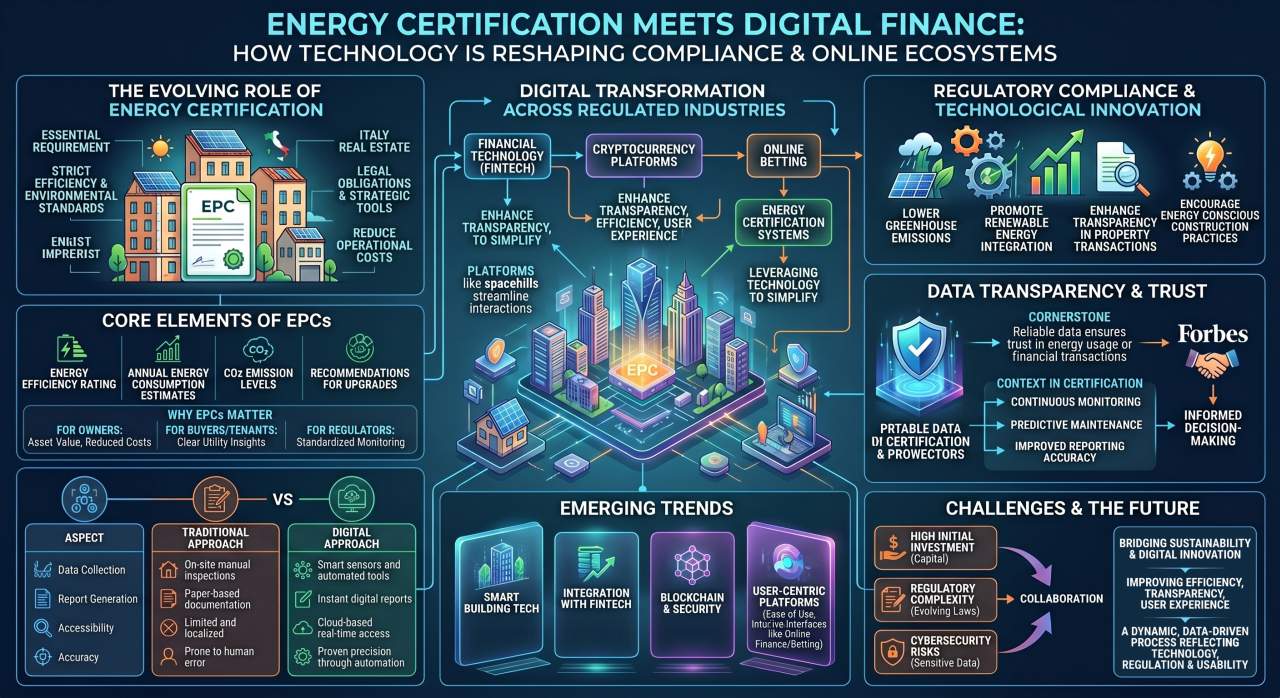
The evolving role of energy certification in modern buildings
Energy certification has become an essential requirement in Italy’s real estate and construction sectors, ensuring that buildings meet strict efficiency and environmental standards. Energy Performance Certificates (EPCs) provide a clear assessment of a property’s energy consumption, helping owners, buyers, and regulators make informed decisions. These certifications are not only legal obligations but also strategic tools for reducing long-term operational costs.
As sustainability becomes a global priority, digital technologies are increasingly integrated into the certification process. From automated assessments to cloud-based reporting systems, innovation is transforming how energy data is collected, analyzed, and communicated.
Digital transformation across regulated industries
The integration of digital solutions into energy certification reflects a broader trend seen across multiple regulated industries. Financial technology, cryptocurrency platforms, and online betting ecosystems have all adopted advanced digital infrastructures to enhance transparency, efficiency, and user experience.
In a similar vein, platforms like spacehills demonstrate how secure digital environments can streamline user interactions while maintaining compliance with regulatory standards. Although operating in a different sector, these platforms highlight the importance of trust, data security, and seamless access—principles that are equally relevant in energy certification systems.
This convergence underscores a shared direction: leveraging technology to simplify complex processes while ensuring accountability.
Regulatory compliance and technological innovation
Italy’s regulatory framework for energy certification is designed to promote sustainability and reduce environmental impact. These regulations encourage the adoption of energy-efficient technologies and ensure that buildings meet minimum performance standards.
Key regulatory objectives include:
- Lowering greenhouse gas emissions
- Promoting renewable energy integration
- Enhancing transparency in property transactions
- Encouraging energy-conscious construction practices
Digital tools have become indispensable in achieving these goals. Automated systems can generate accurate EPC reports, while online platforms allow for efficient data sharing among stakeholders.
A recent analysis by BBC highlights how governments worldwide are investing in digital infrastructure to support environmental initiatives, reinforcing the role of technology in regulatory compliance.
Core elements of energy performance certificates
Energy Performance Certificates provide a comprehensive overview of a building’s efficiency. Understanding their components helps stakeholders identify areas for improvement.
Key information included
- Energy efficiency rating (scale-based classification)
- Annual energy consumption estimates
- CO2 emission levels
- Recommendations for efficiency upgrades
Why EPCs matter
- For property owners: increased asset value and reduced energy costs
- For buyers and tenants: clear insight into future utility expenses
- For regulators: standardized data for monitoring compliance
Traditional vs digital certification processes
The shift from manual to digital systems has significantly improved the efficiency of energy certification. The table below illustrates the key differences:
| Aspect | Traditional Approach | Digital Approach |
|---|---|---|
| Data collection | On-site manual inspections | Smart sensors and automated tools |
| Report generation | Paper-based documentation | Instant digital reports |
| Accessibility | Limited and localized | Cloud-based, real-time access |
| Accuracy | Prone to human error | Better precision through automation |
Digitalization reduces administrative burdens while enhancing accuracy and speed, making compliance more manageable for all parties involved.
Data transparency and trust in digital systems
Data transparency is a cornerstone of both energy certification and digital financial platforms. Reliable data ensures that stakeholders can trust the information presented, whether it energy usage or financial transactions.
According to insights from Forbes, organizations that prioritize data transparency and analytics are better positioned to build trust and maintain long-term credibility. In the context of energy certification, this translates to:
- Continuous monitoring of building performance
- Predictive maintenance using data analytics
- Improved reporting accuracy for compliance audits
These capabilities not only enhance efficiency but also support informed decision-making.
Emerging trends in energy and digital ecosystems
Several key trends are shaping the future of energy certification and its intersection with digital industries:
- Smart Building Technologies:buildings are increasingly equipped with IoT-enabled systems that optimize energy usage in real time. These technologies adjust lighting, heating, and cooling based on occupancy and environmental conditions.
- Integration with financial technologies: energy-efficient buildings often benefit from financial incentives, including green loans and tax credits. Digital finance platforms are making it easier to access and manage these incentives.
- Blockchain and data security: blockchain technology is being explored as a means of securing energy certification data, ensuring immutability and transparency in reporting systems.
- User-Centric platforms: modern platforms prioritize ease of use, enabling non-experts to understand complex data. This approach mirrors trends in online finance and betting platforms, where intuitive interfaces enhance user engagement.
Challenges in adoption and implementation
Despite the advantages of digital transformation, several challenges persist:
- High initial investment: smart systems and digital tools require upfront capital
- Regulatory complexity: keeping up with evolving laws can be demanding
- Cybersecurity risks: protecting sensitive data is critical in digital environments
Addressing these challenges requires collaboration between policymakers, technology providers, and industry stakeholders.
Bridging sustainability and digital innovation
The intersection of energy certification and digital innovation highlights a broader shift toward integrated, technology-driven systems. Whether in building management or financial platforms, the focus remains on improving efficiency, transparency, and user experience.
By adopting advanced tools and embracing digital transformation, industries can meet regulatory requirements while delivering greater value to users. This alignment between sustainability goals and technological progress is shaping the future of both energy management and digital ecosystems.
Energy certification is no longer just a compliance requirement-it is a dynamic, data-driven process that reflects the evolving relationship between technology, regulation, and everyday usability.
Se ritenete utile il contenuto di questa pagina condividetelo su Facebook o Twitter.
Tweet
 Via Galilei, 1
 +39 351 7828816