Efficiency beyond buildings
Efficiency is a broad principle that extends far beyond energy savings and sustainable construction
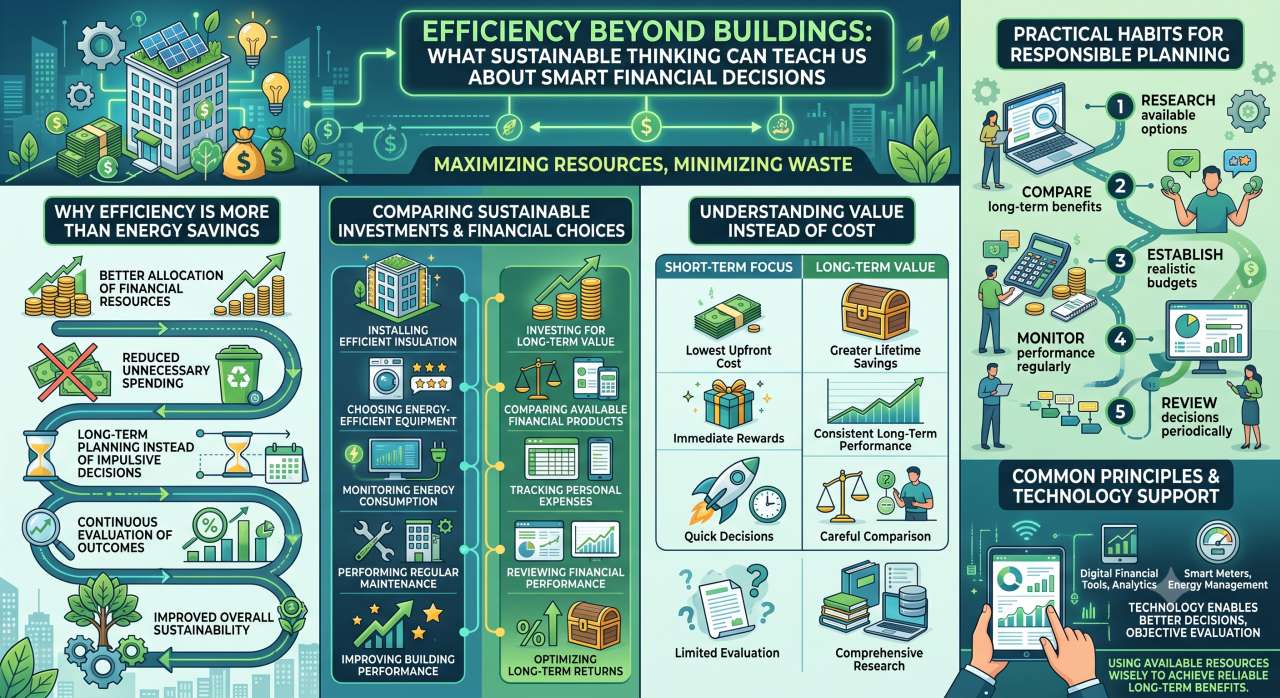
Energy efficiency is often associated with well-insulated buildings, modern heating systems, and renewable energy technologies. At its core, however, efficiency is a broader principle centered on making the best possible use of available resources while minimizing unnecessary waste. Whether managing a commercial property or a household budget, thoughtful planning consistently delivers better long-term outcomes.
Professionals involved in sustainable construction understand that every investment should be evaluated according to both its immediate cost and its future value. The same mindset applies to many areas of personal finance, digital services, and online entertainment, where informed decisions help maximize value while reducing unnecessary risks. Responsible planning remains one of the most effective strategies for achieving lasting results.
This principle extends to digital entertainment as well. Before participating in online gaming or betting platforms, users often compare available offers, bonus structures, and platform features to determine overall value. Resources such as iWild Casino Promotions allow users to review promotional opportunities before making informed decisions, reflecting the same research-driven approach encouraged in sustainable investment planning.
Why efficiency is more than energy savings
Energy-efficient buildings are designed to reduce waste while maintaining comfort and performance. Every improvement is carefully evaluated to ensure that resources are used effectively over many years rather than producing only short-term benefits.
This philosophy can be applied across many industries because efficiency encourages:
- Better allocation of financial resources.
- Reduced unnecessary spending.
- Long-term planning instead of impulsive decisions.
- Continuous evaluation of outcomes.
- Improved overall sustainability.
These principles support responsible decision-making regardless of the sector.
Comparing sustainable investments and financial choices
Although sustainable construction and personal finance appear unrelated, both rely on evaluating costs, benefits, and future returns before making commitments.
| Sustainable Building Decision | Comparable Financial Principle |
|---|---|
| Installing efficient insulation | Investing for long-term value |
| Choosing energy-efficient equipment | Comparing available financial products |
| Monitoring energy consumption | Tracking personal expenses |
| Performing regular maintenance | Reviewing financial performance |
| Improving building performance | Optimizing long-term returns |
In both situations, informed analysis reduces unnecessary waste while improving future outcomes.
The importance of careful evaluation
Professionals responsible for energy certification rely on measurable data rather than assumptions. Building assessments consider insulation quality, heating efficiency, ventilation performance, and expected energy consumption before recommendations are made.
Financial planning follows a similar process. Individuals benefit from reviewing available information, understanding potential risks, and comparing multiple options before committing resources. Decisions supported by reliable information generally produce more sustainable outcomes than those based solely on short-term opportunities.
Resource management creates long-term benefits
Efficient resource management extends beyond energy usage. Organizations increasingly evaluate how financial, technological, and operational resources contribute to long-term resilience.
Key principles include:
- Setting clear objectives before investing.
- Measuring performance regularly.
- Avoiding unnecessary resource consumption.
- Prioritizing sustainable improvements.
- Adapting strategies as conditions change.
These practices strengthen both environmental and financial sustainability.
Technology wupports better decision-making
Digital technologies have significantly improved the ability to monitor efficiency. Smart meters, automated building controls, and energy management software allow property owners to identify opportunities for improvement with greater accuracy.
Similarly, digital financial tools provide access to budgeting platforms, investment analytics, and comparison resources that simplify complex decisions. Better information enables users to evaluate alternatives objectively rather than relying on assumptions.
Understanding value instead of focusing only on cost
One of the most important lessons in sustainable construction is that the lowest initial price does not always represent the best long-term investment. Higher-quality materials or energy-efficient systems often generate measurable savings throughout their operational life.
The same concept applies when evaluating financial products or online services.
| Short-Term Focus | Long-Term Value |
|---|---|
| Lowest upfront cost | Greater lifetime savings |
| Immediate rewards | Consistent long-term performance |
| Quick decisions | Careful comparison |
| Limited evaluation | Comprehensive research |
Considering total value instead of immediate cost encourages more responsible resource allocation.
Practical habits for responsible planning
Whether managing property improvements or personal finances, several practical habits contribute to better long-term results.
Recommended practices include:
- Research available options before making commitments.
- Compare long-term benefits rather than immediate incentives.
- Establish realistic budgets.
- Monitor performance regularly.
- Review decisions periodically as circumstances evolve.
These habits improve efficiency while reducing avoidable risks.
Sustainability and financial responsibility share common principles
Environmental sustainability encourages individuals and organizations to think beyond immediate outcomes. Efficient buildings, responsible maintenance, and renewable technologies all represent investments that provide value over many years.
Financial responsibility follows a comparable philosophy by emphasizing informed planning, disciplined decision-making, and careful resource allocation. In both fields, success depends less on short-term opportunities and more on consistency, preparation, and ongoing evaluation.
As technology continues to influence both sustainable construction and digital financial services, the underlying objective remains unchanged: using available resources wisely to achieve reliable long-term benefits. Whether improving a property’s energy performance or evaluating financial opportunities, informed decisions remain the strongest foundation for sustainable success.
Se ritenete utile il contenuto di questa pagina condividetelo su Facebook o Twitter.
Tweet
 Via Galilei, 1
 +39 351 7828816