Energy-efficient in the digital age
Energy efficiency is no longer limited to residential buildings or commercial properties
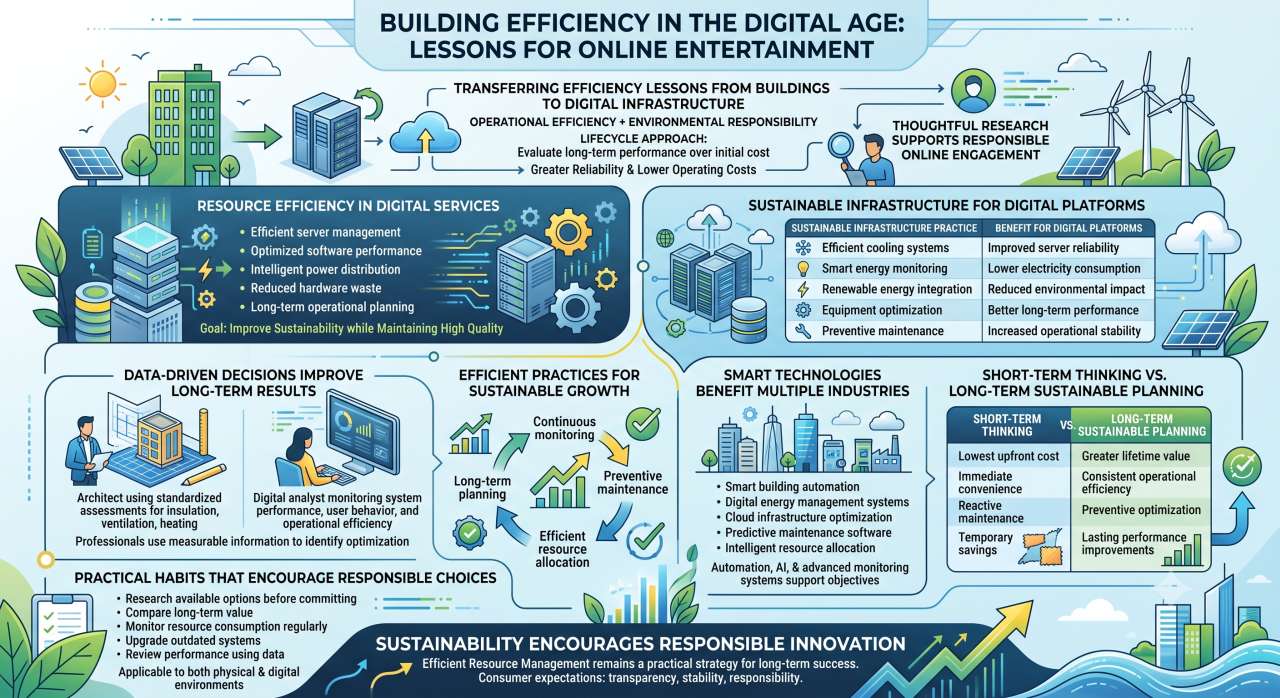
Energy efficiency is no longer limited to residential buildings or commercial properties. As society becomes increasingly dependent on digital services, the same principles of optimizing resources, reducing waste, and improving long-term performance are shaping online infrastructure. From smart buildings to cloud computing, sustainability has become an essential consideration for organizations seeking both environmental responsibility and operational efficiency.
Modern energy certification encourages property owners to evaluate how buildings consume resources over time rather than focusing solely on initial construction costs. This lifecycle approach has proven valuable across many industries because long-term performance often determines overall value. Whether managing a commercial facility or maintaining digital platforms, efficient systems consistently deliver greater reliability and lower operating costs.
A similar evaluation process is useful when selecting online entertainment services. Users increasingly compare security, platform stability, game variety, and overall functionality before participating. Those interested in digital casino entertainment often review collections such as iWild Games as part of making informed decisions, demonstrating how thoughtful research supports responsible online engagement.
Why resource efficiency extends beyond buildings
Energy-efficient buildings reduce waste by carefully managing heating, cooling, lighting, and electricity consumption. Every improvement contributes to lower operating costs while reducing environmental impact.
The same philosophy applies to digital infrastructure through:
- Efficient server management.
- Optimized software performance.
- Intelligent power distribution.
- Reduced hardware waste.
- Long-term operational planning.
These strategies help organizations improve sustainability while maintaining high service quality.
Sustainable technology supports digital services
Every online platform relies on physical infrastructure operating behind the scenes. Data centers, networking equipment, and cloud technologies require significant energy resources to provide continuous availability for users worldwide.
| Sustainable Infrastructure Practice | Benefit for Digital Platforms |
|---|---|
| Efficient cooling systems | Improved server reliability |
| Smart energy monitoring | Lower electricity consumption |
| Renewable energy integration | Reduced environmental impact |
| Equipment optimization | Better long-term performance |
| Preventive maintenance | Increased operational stability |
Investing in efficient infrastructure benefits both service providers and users.
Data-driven decisions improve long-term results
Energy certification is based on measurable information rather than assumptions. Professionals evaluate insulation, ventilation, heating systems, and building performance using standardized assessments before recommending improvements.
Digital businesses follow a similar process by monitoring system performance, user behavior, and operational efficiency. Continuous measurement allows organizations to identify opportunities for optimization while maintaining reliable services.
Efficiency creates sustainable growth
Whether managing buildings or online platforms, sustainable growth depends on balancing performance with responsible resource use.
Successful organizations typically prioritize:
- Continuous monitoring.
- Preventive maintenance.
- Strategic investment.
- Efficient resource allocation.
- Long-term operational planning.
These practices improve resilience while reducing unnecessary costs.
Smart technologies benefit multiple industries
Technological innovation has made sustainability easier to achieve across construction, manufacturing, and digital services. Automation, artificial intelligence, and advanced monitoring systems help organizations make informed decisions based on real-time information.
Examples include:
- Smart building automation.
- Digital energy management systems.
- Cloud infrastructure optimization.
- Predictive maintenance software.
- Intelligent resource allocation.
Each technology contributes to greater operational efficiency while supporting environmental objectives.
Comparing short-term and long-term planning
One of the most important lessons from sustainable construction is the importance of evaluating total value rather than focusing exclusively on initial expenses.
| Short-Term Thinking | Long-Term Sustainable Planning |
|---|---|
| Lowest upfront cost | Greater lifetime value |
| Immediate convenience | Consistent operational efficiency |
| Reactive maintenance | Preventive optimization |
| Temporary savings | Lasting performance improvements |
Organizations applying long-term planning often experience stronger financial and operational outcomes.
Practical habits that encourage responsible choices
Individuals and businesses can improve efficiency by adopting several straightforward practices.
Recommended approaches include:
- Research available options before making commitments.
- Compare long-term value rather than promotional offers alone.
- Monitor resource consumption regularly.
- Upgrade outdated systems when appropriate.
- Review performance periodically using measurable data.
These habits encourage informed decisions across both physical and digital environments.
Sustainability encourages responsible innovation
The transition toward energy-efficient buildings demonstrates how thoughtful planning can benefit both the environment and economic performance. Similar principles now guide the development of digital infrastructure, encouraging organizations to create systems that are efficient, reliable, and adaptable.
As technology continues to evolve, consumers increasingly expect transparency, stability, and responsible resource management from every online service they use. Organizations that invest in efficient operations strengthen their ability to meet these expectations while reducing environmental impact.
Whether improving the energy performance of a building or supporting modern digital entertainment platforms, efficient resource management remains a practical strategy for achieving long-term success. Sustainable thinking encourages careful evaluation, responsible investment, and continuous improvement-principles that remain valuable across every industry driven by technology.
Se ritenete utile il contenuto di questa pagina condividetelo su Facebook o Twitter.
Tweet
 Via Galilei, 1
 +39 351 7828816